Our Story
Founded by owners. Built for owners.
By Kellie Andrews and Ravi Kolli, Co-Founders
We built the group we needed — because nothing else existed.
In 2013, Ravi and I both believed the same thing: if you worked harder than everyone else, growth and success would naturally follow. For a while, that was even true.
Ravi had been in information technology for more than 30 years, building Interweave Technologies into a managed service provider that helps businesses of all sizes manage and support their technology needs. I was running Huntsville Hub, a coworking space built for the solopreneurs and small teams that make up the backbone of North Alabama's business community. We were both good at what we did. We both worked hard. And we both hit a wall.
The businesses plateaued. Life felt increasingly out of balance. And working harder — the thing that had always been the answer — wasn't moving anything anymore.
What I needed, though I didn't have the words for it yet, was a small group of peers who would listen to the stories I told myself about my business, help me come up with real ideas to try, hold me accountable to follow through, and ask the hard questions about the money so I couldn't avoid looking at what was actually going on. I couldn't read a P&L with confidence. I couldn't always explain why things weren't working. I knew I needed to think like an owner instead of a technician — but knowing you need to change and actually changing are not the same thing.
I had no idea that's what a peer advisory board was. I just knew I needed it.
The chamber groups, the coffee club, and what happens when nobody's in charge
Ravi and I first met at a class in Birmingham — a group of us learning how to do business with the government. Not long after, the roughly six of us coming from Huntsville started meeting on our own, and it was there that Ravi and I discovered we were also in sister CEO roundtable groups through the chamber — both of us trying to get those roundtables to fill a need they just weren't built to fill: learning how to think like business owners, not just practitioners.
The groups had good people and real connections. But the chamber put us together and then set us free. We were supposed to take turns hosting and coming up with content. That worked for a while — a few months, maybe — before the meetings quietly became something else. A coffee club. A networking hour. Nobody wanted to put serious effort into preparing content. If you made your space available, you felt like you'd done your part.
I loved the people. But after a year or so, we ended up just gathering and talking. That wasn't what I was looking for.
The piece of paper
Not long after, Ravi and I both showed up independently to the same inquiry meeting for a CEO roundtable group being put together by a seasoned business executive. He had a lot of experience. He had a clear vision for the group. He talked about what we'd work on and how he would help us get where we needed to go.
During the Q&A, I raised my hand.
I told him that I knew what I was supposed to do, said I was going to do it, and then got sucked back into my business and never pulled the trigger. Over and over. No matter how clear the plan was or how good my intentions were. I didn't need more advice. I needed someone who would hold me to my word.
He looked me in the eye and said he knew exactly what I needed.
Then he wrote something on a small piece of paper and slid it across the table to me.
Ravi was watching the whole exchange with great interest. He had the same question I did, and he wanted the answer.
I opened the paper.
My eyes rolled so far back in my head I could practically see behind me.
It said: Just do it.
This wasn't a Nike commercial, and I didn't need to be told to do it. I needed someone who would call me out if I didn't. That social accountability — that moment of having to look someone in the eye next month and explain why you didn't follow through — that was the whole game for me. And he had missed it completely.
Ravi caught me in the parking lot. He had seen my face and needed to know what wisdom had been bestowed upon me.
I showed him the paper. He rolled his eyes and laughed.
We both knew immediately that that was not the room for us.
So we built it ourselves
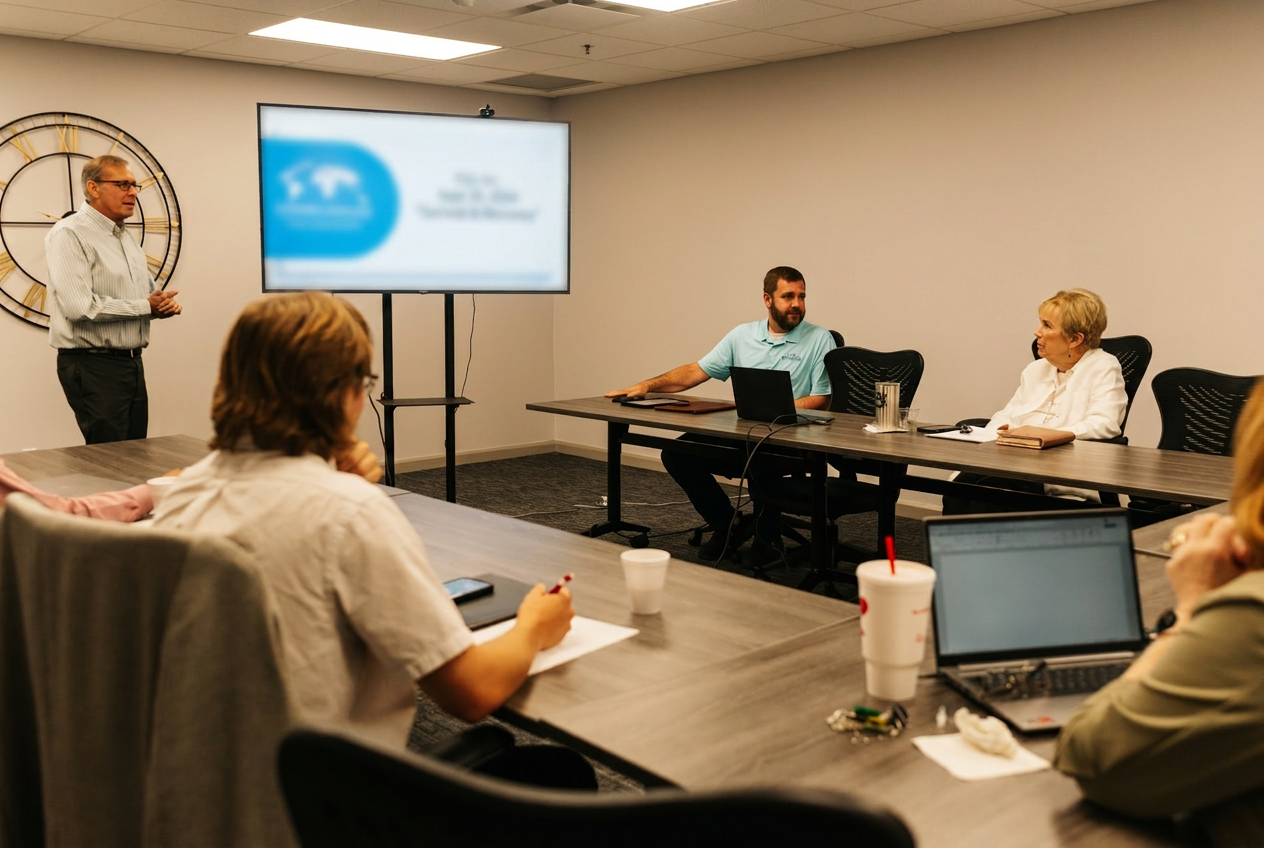
Shortly afterward, Ravi and I started talking seriously. If the group we needed didn't exist, we would create it — but we weren't looking to create new jobs for ourselves. We were busy owners who already had jobs. We needed someone else to run the meetings, manage the process, hold the structure together, and make sure everyone had adequate time and real accountability built in.
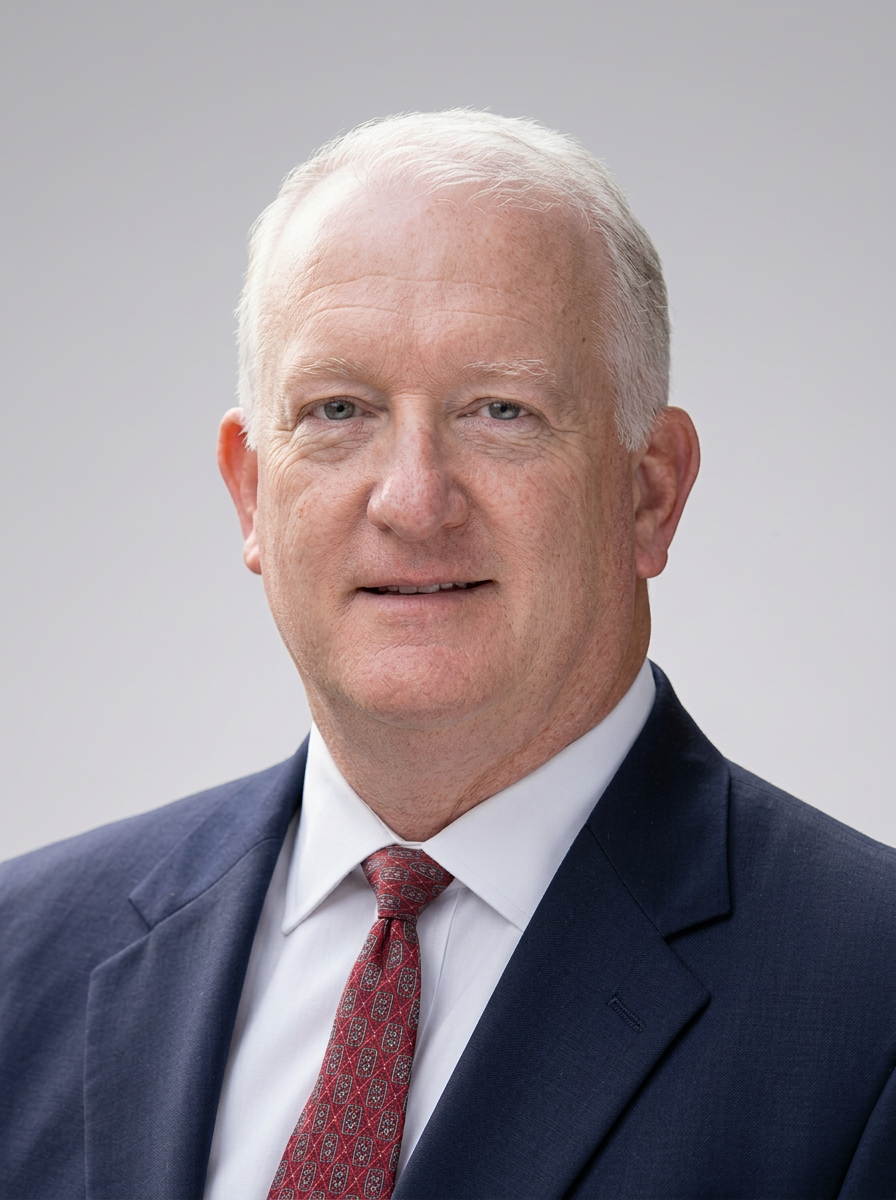
The person we needed was Chris Gattis — a colleague, a trusted friend, and someone who had a long history of telling me the hard truth whether I wanted to hear it or not. Chris didn't just agree to facilitate. He helped architect the structure that made the whole thing work — designing the meeting format, building the forms and frameworks, and bringing a discipline to the room from the very first session that shaped everything AIM still does today.
The format you experience in an AIM meeting has Chris's fingerprints all over it. Chris passed away in 2016, but we continue to be grateful for all he brought to the organization and to each of us individually.
Once we had the process all built out, we went looking for the right members. Business owners like us — people who wanted to learn to read their numbers and actually explain them, who were willing to look critically at their own companies, who had real goals and real struggles and the vulnerability to share them with a room full of peers and hear honest feedback in return.
That was 2013.
More than a decade later, we're still going.
What we've learned in 13 years
The owners who get the most out of AIM aren't necessarily the most successful ones in the room. They're the most honest ones. The ones who come in willing to say what's actually happening in their business — not the polished version, the real one — and willing to hear hard things back.
We've watched members sell their businesses. Break through revenue ceilings they'd been stuck at for years. Navigate family business conflicts that had seemed impossible. Build teams they're actually proud of. Make the hard calls they'd been avoiding.
We've also watched what happens when people aren't ready for it — when they come in looking for validation instead of accountability, or connection instead of growth. The format isn't for everyone. We'd rather tell you that upfront than waste your time or a seat at the table.
Let's have a conversation to see if AIM is right for you.
Start a conversation →The People Behind AIM
Meet the team.
Founders, facilitators, and the founding facilitator who shaped how every AIM meeting still runs today.
Read our stories →Ready to find your room?
AIM Peer Advisory Boards has served small business owners across North Alabama since 2013. Groups are small by design — 6 to 10 members — so every person in the room gets real time, real feedback, and real accountability every single month.
Start a conversation →